Key Takeaways
-
NNN leases shift most property expenses to tenants, but require careful oversight and strong tenants
-
Gross leases offer simplicity and predictability but expose you to rising operating costs
-
The “right” lease depends on your property type, tenant quality, and risk tolerance
-
In Los Angeles, expense volatility (insurance, taxes, utilities) makes lease structure especially important
-
Small lease wording details can significantly impact your long-term returns
The Big Picture: It’s Not Just Who Pays the Bills
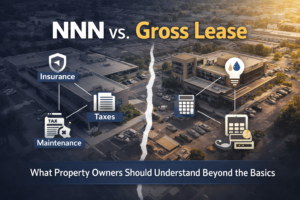
At a glance, the difference between NNN (triple net) and gross leases seems straightforward: in an NNN lease, your tenant pays property taxes, insurance, and maintenance. In a gross lease, you cover those expenses.
Simple, right? Not quite.
What matters isn’t just who pays—it’s how risk, control, and predictability are distributed between you and your tenant. That’s where experienced owners separate themselves from the rest.
NNN Leases: Predictable Income… With a Catch
NNN leases are often marketed as the “hands-off” dream. You collect rent, the tenant handles expenses, and life is good.
But here’s the nuance: you’re trading operational involvement for tenant dependency.
If your tenant is strong, stable, and long-term, NNN leases can deliver consistent, almost bond-like income. That’s why they’re popular in retail and single-tenant commercial properties.
However, if your tenant struggles—or worse, vacates—you’re suddenly responsible for everything again. And in a market like Los Angeles, those costs can escalate quickly.
There’s also the issue of expense reconciliation. Even in NNN leases, you need to verify that expenses are legitimate, properly allocated, and compliant with the lease. “Set it and forget it” rarely works as advertised.
Gross Leases: Simplicity Comes With Exposure
Gross leases flip the equation. You collect a fixed rent, and you handle the expenses.
This structure is common in office properties, especially multi-tenant buildings where splitting costs precisely can get complicated.
The benefit? Simplicity and control. You manage the property directly, maintain consistent standards, and tenants appreciate the predictability.
The downside? You absorb cost volatility.
In Los Angeles, where insurance premiums, property taxes, and utility costs have all been trending upward, that risk is real. If you don’t build in rent escalations or expense stop clauses, your margins can quietly erode over time.
A Side-by-Side Comparison
| Factor | NNN Lease | Gross Lease |
|---|---|---|
| Expense Responsibility | Tenant pays most costs | Owner pays most costs |
| Income Predictability | High (if tenant is stable) | Moderate (depends on expenses) |
| Management Intensity | Lower day-to-day | Higher operational involvement |
| Risk Exposure | Tenant default risk | Expense inflation risk |
| Common Property Types | Retail, single-tenant | Office, multi-tenant |
The Real Decision: Risk vs. Control
Choosing between NNN and gross isn’t about which is “better.” It’s about which aligns with your strategy.
If you prefer predictable income and minimal involvement—and you have access to high-quality tenants—NNN may be the right fit.
If you want more control over your asset, tenant experience, and long-term positioning, a gross lease structure can give you that flexibility.
Many experienced owners in Los Angeles actually use hybrid approaches: modified gross leases, expense stops, or base-year structures that share risk between both parties. These can offer the best of both worlds—if structured correctly.
Where Owners Get Burned (And How to Avoid It)
Most lease problems don’t come from choosing the wrong type—they come from overlooking the fine print.
Things like:
-
How operating expenses are defined
-
Caps on controllable costs
-
Reconciliation timelines
-
Responsibility for capital expenditures
These details determine whether your lease performs as expected—or slowly drains your returns.
If you’ve ever been surprised by a repair bill or a tax reassessment, you already know how quickly assumptions can break down.
Final Thought: Your Lease Is a Financial Strategy
At the end of the day, your lease structure isn’t just a legal document—it’s a financial model for your property.
Done right, it protects your income, aligns incentives, and positions your asset for long-term success. Done wrong, it creates friction, confusion, and unnecessary risk.
If you’re evaluating lease structures—or wondering whether your current leases are working as hard as they should—you don’t have to figure it out alone.
Get Expert Guidance From CCPM
At Crown Commercial Property Management, we help Los Angeles property owners structure leases that maximize returns while minimizing surprises.
👉 Visit CrownCommercialPropertyManagement.com to learn more
👉 Request a free quote and lease review today
A smarter lease today can make a meaningful difference in your property’s performance tomorrow.