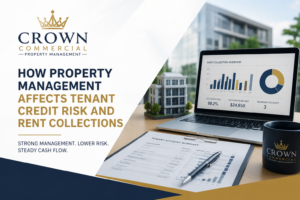
Signing a lease with a financially strong tenant is important. Keeping that tenant financially accountable throughout the lease is just as important.
For commercial property owners, rent collection is not simply an accounting function. The way your property is managed can influence payment habits, identify credit problems early, and determine whether a small delinquency becomes a major financial headache.
Key Takeaways
• Tenant credit risk does not end when the lease is signed. It should be monitored throughout the tenancy.
• Consistent invoicing, communication, and enforcement can reduce collection problems.
• Good property managers identify warning signs before unpaid rent becomes a serious issue.
• Clear financial reporting gives you the information needed to make faster, better decisions.
Good Rent Collection Starts Before Rent Is Late
One of the biggest mistakes you can make is treating rent collection as something that begins after a payment is missed.
Strong commercial management establishes expectations from day one. Tenants should know exactly when rent is due, how it should be paid, what additional charges apply, and what happens when an account becomes delinquent.
Consistency matters. If one tenant receives an immediate reminder while another can go weeks without follow up, you are unintentionally training tenants to test the limits.
Your manager should also understand the lease. Commercial rent can include base rent, CAM charges, operating expense reconciliations, utilities, percentage rent, and other obligations. A missed charge is still lost revenue, even if nobody notices it for six months.
The Warning Signs Usually Come Before the Missed Check
Tenant credit risk changes over time. A business that looked financially healthy three years ago may be dealing with declining sales, higher operating costs, or other pressures today.
Your property manager is often in the best position to notice those changes.
Consider these common warning signs:
| Warning Sign | Potential Risk | Management Response |
|---|---|---|
| Repeated late payments | Cash flow pressure | Track patterns and communicate early |
| Partial payments | Growing financial stress | Review balance and lease obligations |
| Unpaid CAM charges | Disputed or strained account | Reconcile charges and resolve quickly |
| Poor communication | Possible business trouble | Increase follow up and document contact |
| Requests for payment flexibility | Liquidity concerns | Escalate to ownership before agreeing |
The point is not to assume every late payment means a tenant is in trouble. Sometimes someone simply forgot to click “submit.” But patterns matter, and good management makes those patterns visible.
Small Collection Problems Can Become Big Ones
We have seen this firsthand with commercial properties we manage.
At one property, our team inherited tenant accounts where inconsistent follow up had allowed outstanding balances to linger. By reviewing the ledgers, clarifying what was actually owed, and creating a consistent collection process, management gave the owner a much clearer picture of receivables and helped prevent additional balances from quietly accumulating.
At another property, recurring late payments from a tenant became an early signal that closer attention was needed. Rather than allowing the issue to drift month after month, the management team documented the pattern and kept ownership informed, allowing decisions to be made before the exposure became substantially larger.
Neither situation required magic. It required someone paying attention.
Your Financial Reports Should Tell a Story
A rent roll tells you what tenants are supposed to pay. Your management reporting should tell you what is actually happening.
You should be able to quickly identify outstanding balances, aging receivables, recurring late payers, disputed charges, and collection activity. If you need a detective, a magnifying glass, and three spreadsheets to understand who owes you money, your reporting system needs work.
The goal is simple, fewer surprises.
Better Management Protects More Than This Month’s Rent
Strong commercial property management cannot eliminate tenant credit risk, but it can help you identify it sooner and manage it more effectively.
At Crown Commercial Property Management, we combine lease administration, rent collection, financial reporting, and proactive tenant communication to help commercial owners protect their income and stay ahead of potential problems.
Ready for a more proactive approach to your commercial property?
Visit CrownCommercialPropertyManagement.com to learn more and request a free property management quote.