Key Takeaways
- Collecting rent on time is important, but it only tells part of your property’s story.
- Tracking key performance indicators (KPIs) helps you spot problems before they become expensive.
- Metrics like vacancy, maintenance response times, lease expirations, and operating expenses reveal opportunities to improve profitability.
- Data-driven management leads to stronger tenant retention, lower operating costs, and higher long-term property value.
If your monthly review begins and ends with confirming the rent hit your bank account, you could be missing the bigger picture. Rent checks are like checking your car’s gas gauge—you know you can keep driving today, but you have no idea if the engine light is about to come on.
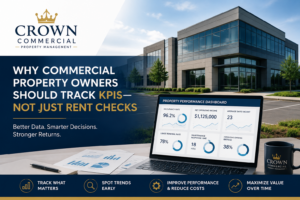
Successful commercial property ownership isn’t just about collecting income. It’s about measuring performance. The right KPIs help you identify trends early, make smarter decisions, and ultimately increase your property’s value.
The Numbers That Actually Drive Performance
Every commercial property generates valuable operational data. The challenge is knowing which numbers deserve your attention.
Here are a few KPIs worth monitoring consistently:
| KPI | Why It Matters | Healthy Target |
|---|---|---|
| Occupancy Rate | Indicates leasing success | 95%+ (market dependent) |
| Lease Renewal Rate | Measures tenant satisfaction | 70–85%+ |
| Average Days Vacant | Reflects leasing efficiency | As low as possible |
| Maintenance Response Time | Impacts tenant retention | Under 24 hours for routine requests |
| Operating Expense Ratio | Tracks cost control | Stable or improving year over year |
None of these metrics exist in isolation. Together, they provide a much clearer picture of your property’s financial health than rent collections alone.
Small Trends Become Big Problems
One of our commercial clients consistently collected rent on time, so ownership assumed everything was running smoothly. However, KPI reporting revealed maintenance response times had gradually increased over several months while work orders remained open longer than usual.
Nothing had become a crisis—yet.
By identifying the trend early, we adjusted vendor scheduling and communication processes before tenant satisfaction declined or lease renewals were affected. The issue was corrected long before it showed up in vacancy numbers.
That’s the advantage of tracking performance instead of reacting to problems.
Better Data Creates Better Decisions
KPIs also make budgeting and capital planning far more effective.
Another client owned a stable multi-tenant commercial property with few vacancies. Reviewing operating metrics revealed utility costs and maintenance expenses were increasing faster than rental income. Because the trend was identified early, ownership was able to prioritize energy-efficient improvements and preventive maintenance instead of waiting for costly equipment failures.
The result wasn’t flashy—but it improved cash flow and reduced unexpected expenses over time. Sometimes the biggest wins come from preventing problems instead of fixing them.
Don’t Just Manage—Measure
The most successful commercial property owners treat their buildings like businesses, not passive investments. Businesses rely on performance metrics to improve results, and commercial real estate should be no different.
Regular KPI reporting gives you confidence that your property is moving in the right direction, highlights opportunities to increase returns, and provides early warning signs when something needs attention. Best of all, it replaces guesswork with informed decision-making.
At Crown Commercial Property Management, we believe you deserve more than a monthly rent report. We provide owners with meaningful performance insights that help maximize profitability and protect long-term asset value.
Ready to see what your property’s numbers are really saying? Visit CrownCommercialPropertyManagement.com to request your free management quote and learn how our proactive reporting helps commercial property owners make smarter investment decisions.