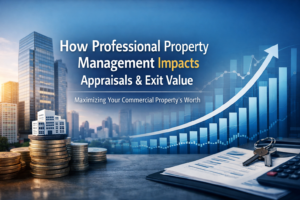
If you own commercial real estate, your property’s value isn’t based on what you paid—it’s based on what it earns. Appraisers and buyers rely heavily on Net Operating Income (NOI) to determine value.
Here’s where professional property management quietly does its best work. By tightening expenses, improving rent collections, and identifying revenue opportunities (think CAM reconciliation, parking, or ancillary income), a good manager doesn’t just “maintain” your asset—they actively grow its income stream.
And since value is often calculated as NOI divided by the cap rate, every dollar of additional NOI can translate into a significant bump in valuation. Not bad for something that happens behind the scenes.
Clean Books, Higher Confidence (and Better Offers)
Let’s be honest—messy financials scare buyers. If your reporting looks like it was assembled five minutes before a meeting, expect more scrutiny, more questions, and lower offers.
Professional management brings structure: consistent monthly reporting, clear expense categorization, and audit-ready documentation. This transparency reduces uncertainty for appraisers and buyers alike.
Less perceived risk can mean a lower cap rate—and even a slight compression in cap rate can dramatically increase your exit price. In other words, clean books aren’t just nice—they’re profitable.
Tenant Quality and Retention: The Hidden Value Drivers
A fully leased building isn’t always a valuable building. Who your tenants are—and how long they stay—matters just as much as occupancy.
Professional property managers focus on tenant screening, lease structuring, and proactive communication. The result? Longer tenancies, fewer delinquencies, and leases that actually protect your downside.
Buyers love stability. If your rent roll shows consistent occupancy with creditworthy tenants and well-structured leases, your property becomes far more attractive at sale.
Operational Efficiency = Higher Margins (and Fewer Headaches)
Good management isn’t just about collecting rent—it’s about running a tight operation.
Vendor relationships, preventative maintenance, and competitive bidding all play a role in controlling costs. A seasoned property manager knows where to spend and where to save, keeping your operating expenses in check without cutting corners.
Here’s a simple illustration of how management impacts value:
| Scenario | Annual NOI | Cap Rate | Estimated Value |
|---|---|---|---|
| Self-Managed (Inefficient) | $500,000 | 7.0% | $7.14M |
| Professionally Managed | $575,000 | 6.5% | $8.85M |
That’s a $1.7M difference—driven by better income and slightly improved market perception. Not exactly pocket change.
Exit Strategy: Making Your Property Easy to Sell
When it’s time to sell, buyers aren’t just purchasing your building—they’re buying your operations.
A professionally managed property comes with systems, documentation, vendor relationships, and a track record. It’s turnkey. That means fewer hurdles during due diligence, fewer renegotiations, and often a faster close.
On the flip side, a poorly managed asset raises red flags. Buyers may discount their offer—or walk away entirely—if they sense operational risk.
The Bottom Line: Management Isn’t a Cost—It’s a Value Strategy
It’s easy to think of property management as an expense line item. But in reality, it’s one of the most controllable levers you have to increase value.
From boosting NOI to improving buyer confidence, professional management doesn’t just maintain your asset—it positions it for a stronger appraisal and a more profitable exit.
Ready to Maximize Your Property’s Value?
If you’re serious about increasing your commercial property’s appraisal and exit value, it starts with the right management strategy.
Get a free, no-obligation quote from CCPM today:
👉 Visit CrownCommercialPropertyManagement.com to request your quote
Or take the next step now—connect with Crown Commercial Property Management and see how much more your property could be worth with the right team behind it.