Key Takeaways
- Poor lease administration can quietly drain your property’s profitability through missed rent increases, billing errors, and compliance issues.
- Small documentation mistakes often turn into expensive legal disputes later.
- Missed critical dates like renewal notices or option periods can cost you valuable tenants or revenue.
- CAM reconciliation errors and incorrect tenant charges can damage owner-tenant relationships.
- Strong lease administration protects both your income and your reputation.
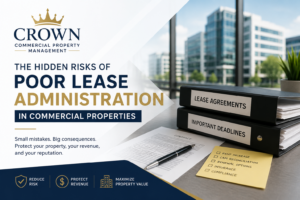
Commercial leases are not exactly thrilling bedtime reading. Somewhere between page 47 and “Exhibit D,” most people start questioning their life choices. But buried inside those dense legal documents are details that directly impact your property’s cash flow, liability exposure, and tenant relationships.
When lease administration is handled poorly, the problems often stay hidden… until they become expensive.
And in commercial property management, expensive problems tend to arrive all at once.
The “Small Errors” That Quietly Hurt Your Bottom Line
A missed rent escalation clause may not seem catastrophic at first. Maybe the increase was only 3%. Maybe it slipped through the cracks because the property manager was juggling twenty other deadlines.
But multiply that mistake across several tenants over multiple years, and suddenly you are looking at tens or even hundreds of thousands of dollars in lost revenue.
Commercial leases are filled with financial triggers:
- Annual rent increases
- CAM reconciliations
- Expense pass-throughs
- Renewal options
- Tenant improvement obligations
- Insurance requirements
Miss one detail, and the property owner often absorbs the cost.
Here is a simple example of how lease administration mistakes can impact annual revenue:
| Lease Administration Issue | Potential Annual Loss |
|---|---|
| Missed 3% rent escalation on $15,000/month lease | $5,400 |
| Incorrect CAM reconciliation | $8,000+ |
| Failure to bill late fees | $2,500 |
| Missed tenant renewal deadline | Vacancy + leasing costs |
| Insurance compliance oversight | Significant liability exposure |
The scary part? Many owners do not even realize these losses are happening.
Missed Dates Can Become Major Problems
Commercial leases operate on timelines. Lots of them.
There are notice periods for renewals, termination options, rent adjustments, tenant expansion rights, and maintenance obligations. Missing one key deadline can dramatically shift negotiating power.
For example, if you fail to notify a tenant within the required window about a rent adjustment or renewal condition, you may lose the ability to enforce it altogether.
That can mean:
- Lower rental income
- Unexpected vacancies
- Costly legal disputes
- Delayed lease renewals
In competitive commercial markets like Los Angeles, even a short vacancy can become painfully expensive once you factor in downtime, tenant improvements, commissions, and marketing costs.
CAM Reconciliation Errors: The Fastest Way to Frustrate Tenants
Nothing damages a landlord-tenant relationship faster than questionable billing.
Commercial tenants expect transparency, especially when it comes to Common Area Maintenance (CAM) charges, taxes, and operating expenses. If reconciliations are inaccurate, late, or poorly documented, tenants notice quickly.
And they push back quickly too.
Disorganized lease administration often leads to:
- Overbilling tenants
- Underbilling tenants
- Duplicate charges
- Missing invoices
- Incorrect expense allocations
Even if the mistakes are unintentional, they create distrust. In some cases, they can even trigger audits or litigation.
Nobody wants a six-month argument over landscaping invoices and parking lot lighting costs.
Compliance Problems Often Hide in the Fine Print
Commercial leases also contain compliance obligations tied to insurance, maintenance responsibilities, ADA requirements, vendor agreements, and reporting deadlines.
If these obligations are not actively monitored, the owner may unknowingly assume risks they thought were transferred to the tenant.
For example:
- A tenant’s insurance policy lapses without anyone noticing
- Required certificates are never updated
- Maintenance obligations become disputed
- Vendors perform work outside lease limitations
Suddenly, a preventable administrative oversight turns into a liability issue.
That is why experienced commercial property managers treat lease administration as an active process, not just a filing cabinet full of PDFs.
Strong Lease Administration Protects Property Value
At the end of the day, lease administration is not just paperwork. It is revenue protection.
Well-managed leases help you:
- Maximize rental income
- Reduce disputes
- Improve tenant retention
- Protect compliance
- Maintain accurate financial reporting
- Strengthen long-term asset value
The larger the portfolio becomes, the more critical this process gets.
Because in commercial real estate, the details are not small details. They are the business.
If you want help protecting your commercial property from costly lease administration mistakes, visit Crown Commercial Property Management to request a free quote from Crown Commercial Property Management. CCPM helps commercial owners stay organized, compliant, and focused on maximizing property performance.