Key Takeaways
- Preventative maintenance helps you avoid expensive emergency repairs and premature system replacements.
- Small recurring expenses today can prevent six-figure capital expenditures later.
- Consistent inspections extend the lifespan of roofs, HVAC systems, plumbing, and parking lots.
- Deferred maintenance often lowers tenant satisfaction and increases vacancy risk.
- A structured maintenance program improves budgeting accuracy and asset value over time.
Stop Waiting for Things to Break
A surprising number of commercial property owners operate with a “fix it when it fails” mindset. It sounds reasonable at first — why spend money before you absolutely have to? But in commercial real estate, waiting for systems to fail is usually the most expensive option available.
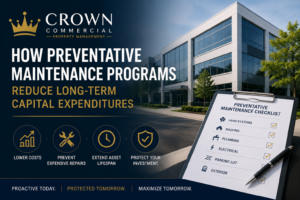
Preventative maintenance programs are designed to catch small issues before they turn into major capital expenditures. Think of it like going to the dentist. A routine cleaning is annoying and mildly inconvenient. A root canal? Much less fun and much more expensive.
If you own or manage commercial property, preventative maintenance is one of the simplest ways to protect your NOI while reducing long-term surprises.
The Real Cost of Deferred Maintenance
When maintenance gets delayed, systems rarely fail gracefully. A neglected HVAC unit does not politely retire after years of service. It usually quits during the hottest week of the year while tenants are calling every five minutes asking why the office feels like a sauna.
Deferred maintenance creates a domino effect:
- Minor roof leaks become structural damage
- Dirty HVAC systems strain components and increase utility costs
- Poor drainage damages foundations and asphalt
- Unmaintained plumbing leads to emergency water intrusion
What could have been a $500 repair can suddenly become a $25,000 project.
Even worse, emergency repairs almost always cost more because vendors charge premium pricing for urgent response work.
The Numbers Add Up Quickly
Preventative maintenance may feel like an added expense on paper, but the long-term savings are often significant.
| Building Component | Preventative Maintenance Cost | Potential Replacement or Failure Cost |
|---|---|---|
| HVAC System | $2,000–$5,000 annually | $80,000–$250,000 replacement |
| Commercial Roof | $1,500 annual inspections | $150,000+ premature replacement |
| Parking Lot Sealcoating | $0.15–$0.25 per SF | Full resurfacing costs 5–10x more |
| Plumbing Maintenance | Routine hydro-jetting and inspections | Major flood remediation and tenant damage claims |
| Electrical Systems | Scheduled testing and servicing | Expensive outages and code violations |
The goal is not to eliminate capital expenditures entirely. Every building eventually needs major upgrades. The goal is to delay those costs as long as possible while reducing the frequency and severity of emergencies.
Your Tenants Notice More Than You Think
Preventative maintenance is not just about protecting physical systems. It also protects tenant relationships.
Tenants notice flickering lights, inconsistent air conditioning, elevator issues, leaks, and recurring plumbing problems. When maintenance issues pile up, tenants begin questioning whether ownership is properly investing in the property.
That can impact renewals, leasing velocity, and overall property reputation.
On the other hand, well-maintained buildings create confidence. Tenants are more likely to renew leases when they feel the property is professionally managed and operationally stable.
In many cases, preventative maintenance indirectly supports occupancy rates and rental income.
Better Budgeting, Fewer Financial Surprises
One overlooked advantage of preventative maintenance programs is predictability.
Emergency repairs destroy budgets. Planned maintenance improves forecasting.
When you consistently inspect major building systems, you gain better visibility into future capital needs. Instead of being blindsided by a failing roof, you can prepare years in advance with phased budgeting and strategic vendor planning.
This allows owners to make smarter financial decisions instead of reactive ones.
It also helps reduce the stress level that comes with unexpected five-figure repair invoices arriving at the worst possible time.
Because somehow, building emergencies never happen during a slow month.
A Smart Maintenance Program Requires Structure
Effective preventative maintenance programs are proactive, documented, and consistent.
That includes:
- Scheduled inspections
- Vendor coordination
- Maintenance tracking
- Capital improvement forecasting
- Routine tenant communication
- Ongoing property condition evaluations
Without structure, maintenance tends to become reactive again very quickly.
Professional commercial property management companies help create systems that keep maintenance organized and accountable year-round.
Protect Your Asset Before Problems Escalate
Commercial properties are long-term investments, and preventative maintenance is one of the best ways to preserve their value over time.
At Crown Commercial Property Management, we help commercial property owners implement proactive maintenance strategies that reduce costly surprises and improve long-term asset performance.
If you would like help building a preventative maintenance plan for your property portfolio, request a free quote today at CrownCommercialPropertyManagement.com.