Key Takeaways
-
Earthquake preparedness isn’t optional in Los Angeles—it’s a core risk-management strategy for commercial property owners.
-
Seismic retrofits, emergency planning, and routine inspections can significantly reduce damage, downtime, and liability.
-
Older buildings face the greatest exposure, but even newer construction benefits from proactive planning.
-
Smart preparation protects not just buildings, but tenants, income, and long-term asset value.
Earthquakes: The Risk You Can’t Insure Away Entirely
If you own or operate commercial property in Los Angeles, earthquakes aren’t a “what if”—they’re a “when.” Unlike floods or fires, earthquakes don’t come with much warning, and even comprehensive insurance doesn’t fully cover lost rent, operational disruption, or tenant displacement. That means preparedness is largely in your hands.
Think of earthquake readiness as financial and operational insurance you can control. With the right planning, you reduce damage, shorten downtime, and reassure tenants that you take safety seriously. And yes, that reassurance has real leasing value.
Know Your Building Before the Ground Moves
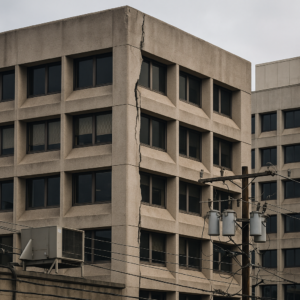
The first step is understanding what you own. Buildings constructed before modern seismic codes—particularly pre-1970 concrete, tilt-up, and non-ductile structures—are at the highest risk. Los Angeles already mandates seismic retrofits for certain building types, but compliance doesn’t always equal readiness.
A professional seismic assessment can identify weaknesses such as soft stories, unreinforced masonry, or outdated anchoring systems. Addressing these proactively costs far less than post-quake reconstruction, not to mention weeks or months of lost revenue.
What the Data Tells Us About Seismic Risk
To put preparedness into perspective, here’s a snapshot of how earthquake vulnerability varies across commercial building types in Los Angeles:
| Building Type | Typical Construction Era | Relative Seismic Risk | Common Issues |
|---|---|---|---|
| Unreinforced Masonry | Pre-1940 | Very High | Wall collapse, poor load transfer |
| Non-Ductile Concrete | 1950–1975 | High | Brittle failure, weak joints |
| Tilt-Up Industrial | 1960–1990 | Moderate–High | Panel separation, roof collapse |
| Post-1995 Code Buildings | 1995–Present | Lower | Non-structural damage |
This isn’t meant to scare you—just to remind you that risk varies, and informed owners make better decisions.
Emergency Plans Aren’t Just for Show
Here’s where many commercial owners cut corners: emergency planning. A dusty binder on a shelf won’t help anyone during an actual earthquake. You need a clear, practical plan your tenants can actually follow.
That includes marked evacuation routes, emergency contact lists, shutoff procedures for utilities, and post-event inspection protocols. Tenants should know what to do, where to go, and who’s in charge. When chaos hits, clarity is everything.
This is also where professional property management makes a real difference. Coordinating vendors, inspectors, and tenant communication after an event isn’t something you want to figure out on the fly.
👉 Want help building a real-world earthquake readiness plan for your properties? Visit CrownCommercialPropertyManagement.com to get a free quote from CCPM.
Don’t Forget the “Small” Stuff (It’s Usually What Breaks)
Ironically, the most expensive earthquake damage often comes from non-structural failures. HVAC units that weren’t properly braced. Shelving that topples. Fire sprinklers that rupture and flood entire floors.
Securing equipment, reinforcing fixtures, and protecting critical systems can dramatically reduce repair costs and speed up re-occupancy. These improvements are relatively low-cost and often deliver the highest ROI in seismic preparation.
Preparedness Is an Asset, Not an Expense
Earthquake preparedness isn’t just about surviving the next shake—it’s about protecting your cash flow, retaining tenants, and maintaining long-term value. Tenants notice when owners invest in safety. Lenders and insurers do too.
When the ground eventually moves (because it will), prepared properties recover faster—and unprepared ones make the evening news.
👉 If you want expert guidance on seismic readiness, compliance, and emergency planning for Los Angeles commercial properties, connect with Crown Commercial Property Management and request a free quote today. Your building—and your balance sheet—will thank you.